Author: beaubrownmusic

  • A Case Study in Rethinking Test Cases at Scale

    A Case Study in Rethinking Test Cases at Scale

    When I stepped into my current role, I inherited a testing practice that was doing its best to keep up with a rapidly accelerating development pace. There was one exceptionally talented tester managing a large and growing TestRail suite, while the engineering team was increasingly using AI-assisted development to ship features faster.

    The result was predictable, even if it wasn’t immediately obvious how to respond. The number of test cases kept ballooning. Regression testing before a release was estimated at four full days of manual effort. Every new feature added more tests. Every release increased the perceived cost of confidence.

    When I arrived as a quality and release manager, I likely added as much confusion as clarity. I was still learning the system, still trying to understand how everything fit together, and at the same time being asked to help scale quality and reduce release risk. I didn’t yet know which test cases truly mattered, which were redundant, and which were artifacts of past assumptions that no longer held.

    The Growing Problem: More Tests, Less Understanding

    Over time, it became clear that the problem wasn’t just the volume of test cases. It was the loss of shared understanding.

    Regression estimates kept growing, even as we talked about improving coverage. But we couldn’t even agree on what “coverage” meant. We didn’t have a stable denominator. We had hundreds of test cases, but no clear sense of how they mapped to the system as it actually existed.

    I also didn’t have the luxury of running every test manually to learn what should stay and what could go. The system was too large, releases were too frequent, and my own context was still forming. Before we could meaningfully reduce regression time or talk about automation strategy, we needed to see what we had.

    Treating Test Cases as Data, Not Just Artifacts

    The shift came when I stopped treating TestRail as the only way to understand our test knowledge.

    I exported the entire test suite as a CSV and pulled it into Cursor. Instead of reviewing test cases one by one in the tool, I worked with them as a dataset. With AI assistance, I was able to identify near-duplicates, surface overlapping coverage, and filter out cases that were tied to short-lived or non-perennial behavior.

    As I worked through the data, I began grouping test cases into categories based on an emerging understanding of the system itself. That structure wasn’t predefined. It surfaced gradually as patterns appeared. The shape of the system is still emerging, and the categories will continue to evolve, but they gave us something we didn’t have before: a way to reason about the whole.

    From there, I transformed the cleaned and categorized test cases into JSON files. The goal wasn’t immediate execution. It was to create a kind of test case API, a structured, machine-readable representation of what we believe should continue to work.

    I then committed those JSON files to a code repository. That step turned out to be more important than I initially expected. Having the test cases under version control made them visible, reviewable, and changeable in the same way as production code. They became a living representation of our current understanding of the system, rather than static artifacts trapped inside a tool.

    Putting the test cases in a repo also opened the door to treating them as assets that could evolve alongside the product. They could be refactored, discussed, and eventually consumed by automation tooling as part of the delivery pipeline, rather than existing only for manual execution.

    Momentum, Deep Work, and an Unexpected Acceleration

    I should also say this work didn’t unfold the way I initially imagined.

    What I thought would be an eight-week project, tackled in fits and starts alongside other work, ended up becoming a concentrated two-day effort over a holiday. Once I had the space to focus deeply, without competing urgent priorities, the shape of the work came into view much more quickly than I expected.

    That experience was instructive in itself. It wasn’t that the problem was trivial. It was that the work required sustained attention more than raw effort. Given uninterrupted time, the task of extracting, cleaning, categorizing, and restructuring the test cases moved from feeling overwhelming to feeling possible.

    This shift was also influenced by ideas I’d been turning over after listening to Ben Fellows on Joe Colantonio’s podcast. In particular, the way Ben talked about test cases as something closer to code than documentation helped unlock a different approach for me. Instead of trying to manage the test suite purely through a tool, I began treating it as a body of logic that could be packaged, transformed, and reasoned about more flexibly.

    Important Caveats and Work Still Ahead

    This wasn’t the end of the work. In many ways, it was the beginning.

    There is still significant effort ahead in standardizing preconditions, steps, and expected results so that these test cases can truly function as reliable, reusable assets. That standardization is what will eventually allow tools like Playwright’s MCP server to do meaningful work on our behalf, not just generate scripts, but reason about behavior, coverage, and gaps.

    I’m also very aware that testing goes far beyond test cases. Exploratory testing, observation, questioning, and learning remain essential. Test cases are not the whole of testing.

    But they are important.

    Good test cases cost money because they’re valuable. They encode long-term truths about the system. They give us clear signals that things that used to work still work. And when they’re structured well, they provide stable ground from which thoughtful exploration can happen, rather than replacing it.

    What Changed the Conversation

    This work didn’t magically eliminate regression effort overnight. But it changed how we talked about it.

    Instead of asking, “How long will regression take?” we could ask:

    – Which behaviors are truly perennial? Which deserve stable automated checks, and at which architectural level (API, service, integration, UI, observability)?

    – Which tests should remain exploratory by nature?

    – Where are we paying maintenance costs without proportional value?

    Those questions helped shift the focus from quantity to intent, and from tooling alone to architectural judgment.

    A Closing Reflection

    This case study isn’t about a clever technical trick or a single tool. It’s about posture.

    When systems grow faster than human understanding, adding more artifacts doesn’t automatically increase confidence. Sometimes the work is to slow down just enough to extract the knowledge we’ve accumulated and reshape it into a form we can reason about again.

    Test cases, treated carefully, can become an executable source of truth. Not the only one, but an important one. And creating that clarity is often the work that makes everything else possible.

    Beau Brown

    Testing in the real world: messy, human, worth it.

  • AI as a Sensemaking Partner

    AI as a Sensemaking Partner

    There’s a way of working with AI that I don’t hear talked about very often. It doesn’t feel like prompt engineering, and it doesn’t feel like outsourcing thinking. It feels quieter than that. Slower, even when it’s fast. More like sitting with an idea until it reveals what it actually is.

    When I use AI this way, I’m not looking for answers so much as surfaces to think against. I’m trying to understand what I believe, what I’m assuming, and what I might be missing. The tool helps, but it doesn’t lead. And that distinction has started to feel important.

    What I’m Experiencing

    The most valuable work I’ve done with AI rarely happens in one exchange. It starts with something unfinished. A half-formed thought. A sense that there’s something true here, but I don’t yet know how to say it. I ask the AI to help me articulate it, and then I read what comes back carefully. I notice where it assumes too much, where the tone is wrong, where something sounds impressive but doesn’t actually serve the point I’m trying to make.

    So I push back. I ask it to elaborate. I ask it to remove parts. I ask it to aim at a different audience. Sometimes I realize the problem isn’t the response at all, but my own lack of clarity. The process becomes one of refinement rather than generation. The AI helps me externalize my thinking, but I remain responsible for deciding what stays and what goes.

    What surprises me is how human this feels. The value isn’t in the speed of output. It’s in the way the dialogue forces me to pay attention. I can’t disengage without the work getting worse. If I abdicate judgment, the artifact becomes hollow very quickly.

    What This Means for Software Development

    If this way of working becomes more widespread, it has implications beyond writing or planning. It points to a shift in what we actually value in software development. Tools are getting remarkably good at producing code, tests, and documentation. They can process more context than any individual ever could. But they do not understand consequences. They don’t feel the weight of tradeoffs or the cost of being wrong in the real world.

    That means the center of gravity moves. The scarce skill is no longer raw production. It’s sensemaking. It’s the ability to hold complexity, challenge confident outputs, and decide what not to ship. AI increases the volume of possibilities. Humans still decide which of those possibilities deserve to exist.

    Organizations that confuse acceleration with understanding will move quickly and accumulate invisible risk. Organizations that pair powerful tools with disciplined human judgment have a chance to build software that is not just fast, but trustworthy. In that environment, the question isn’t whether AI can do the work. It’s who is willing to take responsibility for what the AI produces.

    What This Means for Software Testers

    For testers, this moment feels strangely familiar. Testing has always required sitting in uncertainty, asking inconvenient questions, and resisting the urge to accept artifacts at face value. Using AI as a sensemaking partner doesn’t change that. It intensifies it.

    When AI generates tests, or explores code paths, or summarizes system behavior, someone still has to understand what happened. Someone still has to say, “I know what this tested, and I know what it didn’t.” That knowledge doesn’t come from the artifact alone. It comes from learning the system deeply enough to notice what’s missing.

    Testers who see their role as primarily producing artifacts may feel displaced. Testers who see their role as cultivating understanding will find new leverage. The work becomes less about writing things and more about interpreting them. Less about volume and more about discernment.

    A Closing Thought

    I don’t think the most important question about AI is whether it can think. It’s whether we’re willing to stay engaged when it thinks quickly and confidently on our behalf.

    Used well, AI gives us better drafts, better surfaces, better starting points. Used poorly, it gives us plausible nonsense at scale. The difference isn’t technical. It’s human.

    I’m trying to use AI in a way that sharpens my responsibility rather than dulls it. As a developer, as a tester, and as someone who still believes that clarity, care, and judgment matter.

    Beau Brown

    Testing in the real world: messy, human, worth it.

  • People, Processes, Tools

    People, Processes, Tools

    There’s a thought that’s been circling in my mind for a while now, and I want to try to name it clearly.

    We’re living through a moment where many leaders are saying some version of:

    “We need to invest heavily in tools right now.”

    That sentence makes a lot of people nervous. It makes me nervous too. Because investing in tools often feels like investing less in people. And that feels wrong, or at least morally suspect, especially for those of us who believe that good software is built by thoughtful, humane teams.

    At the same time, I’m not convinced the situation is as simple as “tools replacing people.” I think something more subtle is happening.

    So here’s what I want to say, plainly and in order.


    What I’m Trying to Say

    1. Industries tend to move through phases where investment shifts between people, processes, and tools.
    2. We are currently in a phase where tools are advancing faster than our ability to staff and scale with people alone.
    3. Investing in tools does not eliminate the need for people, but it changes what kind of people are most valuable.
    4. If history rhymes, this phase will eventually create more demand for humans with judgment, skepticism, and systems-level thinking.
    5. Software professionals, especially testers, need to orient their careers toward that future rather than fighting the present.

    Why I Think This Is True

    1. Hiring your way to scale breaks down

    Building enterprise software that sells requires speed, reliability, and consistency. At a certain point, you can’t just add more humans to get more output. It’s expensive, fragile, and slow.

    Tools exist precisely to decouple output from headcount. That’s not cruelty. It’s economics.

    2. Tools absorb repetition, not responsibility

    Modern tools and AI systems are exceptionally good at:

    • repetition
    • speed
    • pattern matching
    • brute-force analysis

    They are not good at:

    • understanding markets
    • weighing tradeoffs
    • noticing when assumptions are wrong
    • deciding what not to build
    • recognizing when something “works” but is still a bad idea

    That responsibility doesn’t disappear. It moves.

    3. Every major technological shift has followed this pattern

    We’ve seen this before:

    • Handcrafted work gives way to mechanization
    • Mechanization creates scale and standardization
    • Standardization exposes new risks and blind spots
    • Expertise becomes valuable again, but in a different form

    The work changes, but it does not vanish.

    4. AI requires conductors, not just operators

    The metaphor that keeps coming to mind is orchestration.

    The most valuable people in the next phase are not those who blindly trust the tools, nor those who reflexively reject them. They are people who can:

    • challenge outputs
    • interrogate assumptions
    • think in systems
    • understand incentives
    • recognize second-order effects
    • hold quality, speed, and ethics together

    That’s not new work. It’s the work good engineers and testers have always done.


    What This Means for Businesses

    For businesses, “investing in tools” should not mean abandoning people. It should mean:

    • using tools to reduce toil and repetition
    • freeing humans to focus on judgment and strategy
    • making quality more consistent, not more brittle
    • resisting the temptation to replace wisdom with velocity

    Organizations that mistake tool adoption for wisdom will move fast and break trust. Organizations that pair strong tools with thoughtful people will endure.


    What This Means for Software Professionals

    For software professionals, this moment calls for honesty.

    The work is changing. Some roles will shrink. Some tasks will disappear. But new forms of responsibility are emerging:

    • system-level thinking
    • risk assessment
    • quality judgment
    • cross-functional communication
    • ethical and economic reasoning

    The people who thrive will not be the fastest typists or the most prolific code generators. They will be the ones who can say:

    • “This looks right, but it’s wrong in context.”
    • “This optimizes the wrong thing.”
    • “This will hurt us later, even if it helps now.”

    Those skills have always mattered. They’re just becoming harder to fake.


    What This Means for Younger Testers

    If you’re earlier in your testing career, this can feel unsettling. It might sound like the ground is shifting under your feet.

    But here’s the hopeful part.

    Testing has always been about:

    • curiosity
    • skepticism
    • learning systems deeply
    • noticing what others miss
    • asking uncomfortable questions

    Those skills translate incredibly well to a world full of powerful tools.

    Don’t anchor your identity to a single tool or framework.

    Anchor it to your ability to think well, to learn quickly, and to care about outcomes.

    If you can learn how to work with tools while retaining judgment, humility, and courage, you won’t be replaced. You’ll be needed.


    A Closing Thought

    I don’t think we’re headed toward a people-less future. I think we’re headed toward a future where undisciplined human labor becomes less valuable, and disciplined human judgment becomes more valuable.

    That transition is uncomfortable. It always is.

    But if history rhymes, the pendulum will swing again. And when it does, the people who can think clearly, question wisely, and care deeply about quality will be the ones shaping what comes next.

    Beau Brown

    Testing in the real world: messy, human, worth it.

  • Egoless Testing

    Egoless Testing

    Jerry Weinberg wrote about egoless programming decades ago. The idea was simple. The code isn’t you. It doesn’t express your worth. It isn’t evidence of your brilliance or your failure. It’s just something that needs to work, and you can let others help you make it better. Lately, I’ve been wondering what egoless testing might look like.

    Because this week, I asked more “dumb questions” than I have in a long time. I stared at flows that should have been obvious. I felt confused about basics. I took nearly an hour just to understand what I was actually supposed to be testing. And I could feel that old internal narrative starting to whisper.

    “You should be better than this.”

    “You’ve been told you’re a good tester. Prove it.”

    “Everyone else gets this already.”

    It’s amazing how quickly you can go from feeling competent to feeling fraudulent in your own mind. I didn’t come to this industry as a developer. Testing was my way in. And from day one, it taught me something that has shaped everything since: you often begin with confusion, and you work faithfully toward clarity.

    That is not a flaw in the work. It is the work.


    The Work Is Hard Because It’s Hard

    Testing in a new system, with a new data model, new flows, new expectations, and new rhythms… it can feel disorienting. Even when you’re good at this work. Even when you’ve shipped major features. Even when you’ve carried the responsibility of quality in high-pressure environments.

    The difficulty is not a reflection of your intelligence. The difficulty is a reflection of the problem. And pretending otherwise never helps anyone.


    Questions Aren’t a Sign of Weakness

    When I’m tired or overwhelmed, asking questions feels like exposing a flaw. Like I’m announcing, “I don’t belong here.” But the truth is different. Questions are the work. Questions are how testers build mental models. Questions are how risk becomes visible. Questions are how teams get safer.

    Egoless testing means letting the question be the question, without loading it with shame. Sometimes the “dumb” question is the one everyone else was silently avoiding.


    Your Confusion Isn’t You

    This is where Weinberg’s spirit still applies. Egoless programming says: the code isn’t you. Egoless testing says: the confusion isn’t you. If it takes you an hour to understand something, that hour wasn’t wasted. It was invested in clarity.

    If you ask something basic, you didn’t embarrass yourself. You surfaced an assumption that needed to be named. Your value has never been the speed of your comprehension. Your value is the honesty and care with which you help the team see risk.


    Testing Requires a Self You Must Protect

    Being the person who says “I don’t understand this yet” can feel vulnerable. Being the person who asks the questions no one else is asking can feel lonely. Being the person responsible for the final call can feel heavy. Egoless testing means tending to the part of yourself that actually makes good testing possible. You cannot test well if you mistreat the person doing the testing.

    When I feel lost, I try to remember something simple: My questions aren’t signs of incompetence. They are signs that I am doing the slow, faithful work of making sense of something that matters. Egoless testing is not about pretending you have no ego. It is about refusing to punish yourself for being human in a very human job. It is about accepting that confusion is not a sin. It is part of the craft.

    Beau Brown

    Testing in the real world: messy, human, worth it.

  • Taking Testing Seriously (Still)

    Taking Testing Seriously (Still)

    AI can process an entire codebase in seconds. It can trace dependencies, generate test cases, and even simulate user behavior with near-human fluency. Sometimes it feels like the machine is thinking faster than I can blink.

    The language model may be doing something approximating human thinking, but that doesn’t mean it’s thinking for me.

    I’ve been reading James Bach and Michael Bolton’s new book, Taking Testing Seriously, and it reminded me how much testing has always depended on human judgment, context, and responsibility, no matter how powerful the tools become.


    Learning Through Experience

    Bach and Bolton describe testing as a process of learning about a product through direct engagement—by exploring, experimenting, and experiencing it.

    AI can help me explore faster, but I still have to learn. There’s no shortcut for that kind of embodied understanding. It’s the learning that implants memory in a tester’s brain, memory about how the system behaves, where it creaks, and where it hides risk.

    That’s something no model can outsource.


    Automation Isn’t the Whole Story

    The Rapid Software Testing methodology emphasizes that testing is not defined by the artifacts we produce—like test cases or automation reports—but by the activity of investigation and evaluation.

    Automation and AI can generate code, plans, and data. But the essence of testing is in the performance: observing, questioning, interpreting, and making sense of what we see.

    I think about this whenever I read an AI-generated report. It often looks complete, but something in me always asks, Is that actually what we needed to know?


    Responsibility Still Belongs Somewhere

    According to RST, tools and automation can help us check software, but they cannot test on their own. Testing requires interpretation, judgment, and context awareness—qualities that remain distinctly human.

    Even if AI executes every scenario, someone still has to take responsibility for what those results mean. Someone has to say, “I understand what this automation did. I see its limits. I’ll stand behind this call.”

    It’s not about taking blame when things go wrong. It’s about stewardship. It’s about deciding who will train the AI, interpret its findings, and ensure that testing continues to serve the purpose of quality, not just completeness.


    The Human Role Isn’t Diminishing; It’s Deepening

    Testing today looks nothing like it did even five years ago. We’re surrounded by tools that can analyze faster, reason more broadly, and write with startling accuracy. But Taking Testing Seriously helped me realize something important.

    AI expands what is possible, but it does not expand our wisdom automatically.

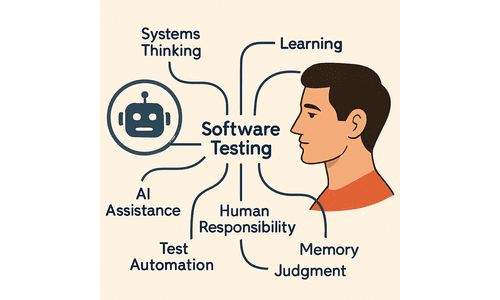
    The work still requires the same human qualities it always did: curiosity, accountability, systems thinking, empathy. The tools change, but the craft endures.

    We don’t stop being testers when the bots arrive. We become the ones who decide how they test, why they test, and what success means.

    That’s what it means to take testing seriously, still.

    Beau Brown

    Testing in the real world: messy, human, worth it.

  • Against the Crapification of Software

    Against the Crapification of Software

    AI is an incredible tool. It’s fast, articulate, and tireless. It can write code, generate tests, and even plan releases. But like every powerful tool, it can also amplify the skill—or the lack of it—of the one using it.

    I’ve started to notice a kind of crapification creeping into our industry. Not because AI is bad, but because we’re forgetting the fundamentals of what makes software valuable.

    Software that knows how to work—but not why

    AI can now spin up an app that works. It can create a CRUD interface, talk to an API, generate some tests, and even deploy. But AI doesn’t yet understand why the app exists, or what keeps a business sustainable.

    That’s the part humans still have to bring:

    The economic reasoning—what creates value, what drives cost. The empathy for users—what “done right” actually feels like. The discipline of systems thinking—how to build something that lasts.

    Without those, AI becomes a very efficient generator of noise. It builds code that compiles, but doesn’t cohere. It designs features that look smart, but have no customer anchor.

    The human disciplines that built our field

    Long before AI, we had people like W. Edwards Deming, Peter Drucker, and Gerald Weinberg teaching us how to think about quality, systems, and people.

    Deming reminded us that a bad system beats a good person every time.

    Drucker taught that the purpose of business is to create and keep a customer.

    Weinberg showed that quality is value to some person.

    These aren’t old management clichés. They’re survival skills for the AI age. Because the temptation now is to let the tool lead, to assume speed equals value. But speed without understanding just gets you to the wrong place faster.

    AI needs adults in the room

    AI doesn’t know how to run a business. It doesn’t know your market, your constraints, your customers’ quirks, or your reputation.

    It’s not a CEO, or a product manager, or even a quality engineer. It’s a very competent intern—eager, literal, and unaware of consequences.

    That means organizations still need people who:

    Know what not to build. Understand what good feels like to a customer. Recognize that profit comes from value, not just velocity.

    Without those voices, software devolves into something that merely exists—shiny, but hollow.

    Customers, beware of snake oil

    There’s also a warning here for customers. The allure of “build your own AI-powered management system” is strong. But it’s a dangerous illusion.

    The best organizations still depend on human intelligence—the kind shaped by experience, ethics, and pattern recognition that no model has fully captured.

    Trust those who’ve built, scaled, and sustained real systems. The ones who understand that architecture, governance, and economics are intertwined. They may move slower, but their work endures.

    Building with wisdom, not just power

    AI is here to stay, and thank God for that. It’s helping us automate, explore, and imagine. But wisdom is still a human job.

    If we want to avoid crapifying the future, we have to bring the same care that Deming brought to factories, Drucker brought to management, and Weinberg brought to testing—to this new generation of tools.

    The future of software quality won’t just be measured in code coverage or velocity, but in whether we still remember why we build anything at all.

  • Testing When You’re Tired

    Testing When You’re Tired

    Some days you have all the margin in the world.

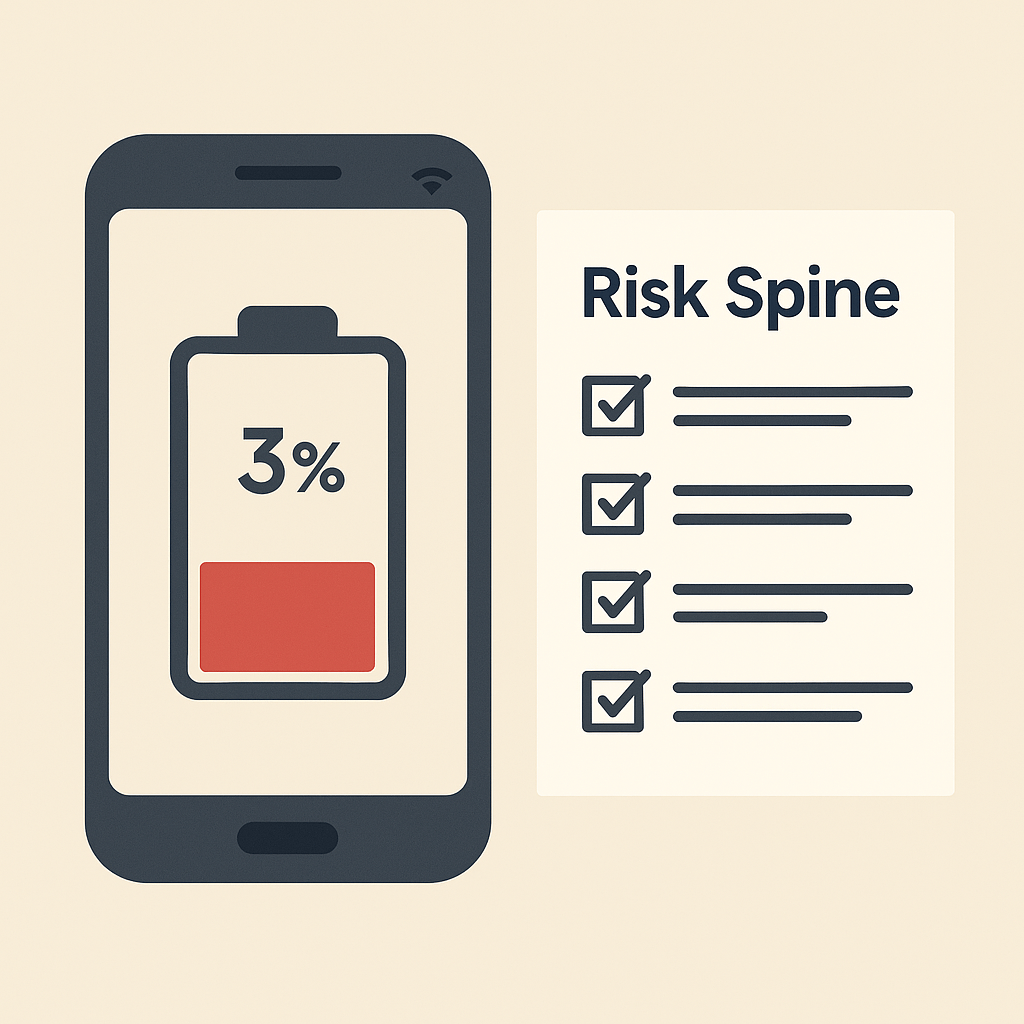
    Other days, your brain feels like a phone at 3%—dimmed, conserving, warning you not to open one more app.

    You still have to test.

    Ministry taught me something about this. You cannot live at full output forever, and you shouldn’t pretend you can. The work is real, the stakes are real, and so is the body that has to carry you through it. Here’s how I try to test faithfully when I’m tired—without making things worse for future me or for my team.

    1) Shrink the surface area, keep the signal

    When energy is low, I narrow the scope on purpose.

    Run the “risk spine.” Touch the core login, money, data-loss, and notification paths first. Favor high-yield charters. One flow, one persona, one failure mode. Capture just enough evidence. Two screenshots, steps, and an observed/expected pair. Stop there.

    Goal: preserve signal without chasing every shiny edge.

    2) Trade clever for clear

    Tired brains love rabbit holes. I choose clarity instead.

    Write plain-language observations instead of clever theories. Use templates: “Steps → Expected → Actual → Notes.” Log before you fix. Even if the fix seems obvious, leave a breadcrumb a teammate can trust.

    Goal: today’s clarity becomes tomorrow’s velocity.

    3) Instrument the moments you’ll forget

    Fatigue erases context. Save Future You.

    Tag runs with a build hash and test data seed. Paste the exact query, cURL, or environment toggle you used. When you guess, label it a guess: “Hypothesis: cache key collision.”

    Goal: make partial work reproducible and safe to hand off.

    4) Lean on tools without outsourcing judgment

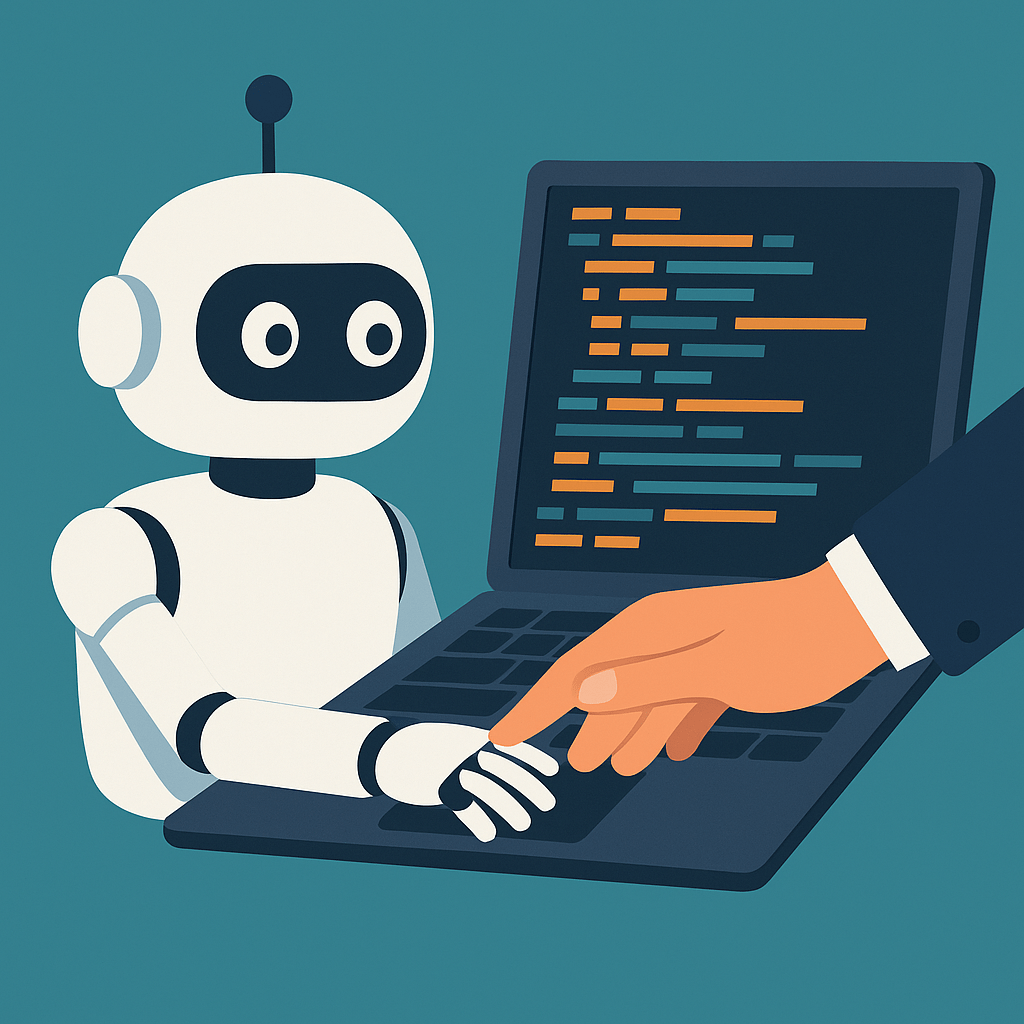
    AI helps a lot when I’m running low, but I use it like cruise control, not a chauffeur.

    Generate test ideas or edge-case lists for a single flow. Ask for selector strategies or fixtures when my brain stalls. Let AI summarize logs or diffs I don’t have the attention to parse.

    Then I decide what matters. Tools can widen my view; they cannot choose my priorities.

    5) Choose checks over hunts

    Bug-hunting is expensive when you’re tired. Guards are cheaper.

    Add or tune alerts on error rate, latency, and key business events. Drop a smoke test or synthetic on the riskiest endpoint. Turn on feature flags and define a rollback. Write the rollback first.

    Goal: create tripwires so the system helps carry the load.

    6) Use the “10-minute closeout”

    Before you stop for the day, spend ten minutes to protect tomorrow.

    Title one issue per discovered risk, even if it’s thin. List next three tests you would run with fresh energy. State risk posture in a sentence: “Safe to ship behind flag. Watch sign-ups and webhook failures.”

    Goal: you end tired, not tangled.

    7) Hold humane boundaries

    Unless it’s life- or business-critical, it can wait until morning.

    Write it. Prioritize it. Rest.

    Goal: protect the human so the human can protect the system.

    A word to teams and leaders

    Tired testers don’t need pep talks. They need guardrails and focus.

    Agree on a risk spine everyone knows by heart. Keep a shared “when tired” playbook that swaps breadth for depth. Normalize short, clear notes over perfect reports.

    Quality is not heroics. It is repeatable care.

    There will always be days when the battery blinks red. On those days, fidelity beats speed. Narrow the scope. Preserve the signal. Leave a trail.

    It is enough to be faithful with the energy you have.

    Beau Brown

    Testing in the real world: messy, human, worth it.

  • Living in the Tension

    Living in the Tension

    AI makes me better at my job every day. It also makes me wonder what my job will look like tomorrow.

    Remote work allows me to be present at home in ways that once felt impossible. Yet it also keeps me tethered to a chair, watching the glow of my screen, responding to the latest “fire” while real life unfolds around me.

    Homeschooling has been a gift for my family. I get to see my kids learn and grow every day. And still, there are moments when I feel like an inattentive father, missing the chance to join them in the discoveries happening just down the hall.

    And like many people, I sometimes wonder about sustainability. Will this work provide a future strong enough to carry my family forward?

    Gratitude and Worry

    I find myself living in the tension between gratitude and worry. Grateful for meaningful work, for technology that amplifies what I can do, for the closeness of family life. Wary of what gets lost in the process, of what is slipping past while I am busy answering another message, of what tomorrow’s economy might hold.

    I don’t think I am alone in this. Many of us are trying to make sense of lives that are both more connected and more isolated than ever before, more productive and more precarious, more efficient and more exhausting.

    What I’m Learning

    I don’t have this all figured out. But here are a few things I’m learning to hold onto:

    Presence matters more than productivity. My kids may not remember every fire I put out, but they will remember whether I looked up when they came into the room. Faith is not an add-on. Trusting God with my future is not something I do after work; it’s the only way I can sustain work at all. Community has to be chosen. It doesn’t just happen when you’re remote. It requires intention—whether that’s a walk with a friend, a call to a colleague, or a small group that prays together.

    A Closing Thought

    The tension isn’t going away. AI will keep advancing. Work will keep demanding. Family will keep needing.

    But perhaps the goal isn’t to escape the tension. Perhaps the goal is to live faithfully within it—to keep showing up, to keep naming what is real, and to trust that the One who holds all things can hold even this.

    Beau Brown

    Testing in the real world: messy, human, worth it.

  • Testing in a New Environment: Learning to Walk Before You Run

    Testing in a New Environment: Learning to Walk Before You Run

    Starting to test in a new environment is like stepping into a house where every door opens to a room you’ve never seen before. The floorplan is unfamiliar. The furniture doesn’t match what you’re used to. Some doors lead to wide, bright spaces. Others open into cluttered closets where things have been stashed for years.

    That’s how it feels when you inherit a new data model, user flows, and all the little idiosyncrasies of an unfamiliar system.

    I felt this when I began at my current company. The product worked differently than anything I had tested before. The way data moved through the system, the permissions and flows users relied on, even the vocabulary teams used—all of it required patience to understand. It’s tempting in those early weeks to feel like you should already be contributing at full speed. But I’ve learned that testing is not about rushing; it’s about orienting yourself so your contributions actually add clarity and trust.

    What Makes This Hard

    Different Data Model You can’t assume fields, relationships, or hierarchies will line up with what you’ve seen elsewhere. Even basic entities like “client,” “task,” or “invoice” can mean something very specific to the business. Unique User Flows The same outcome (say, creating a billing record) may involve different steps, dependencies, or permissions than you’ve seen in other systems. Organizational Idiosyncrasies Every company has its quirks—naming conventions, old feature flags that never got retired, or workflows that exist only because of one big client. These things don’t show up in the onboarding docs but they matter a lot in day-to-day testing.

    Practical Advice for Getting Up to Speed

    Here’s what has helped me move at a reasonable pace while still beginning to contribute:

    Start With the Core Workflows Find the 3–5 most critical flows for the business. At my current company, this meant things like creating proposals, invoicing, and document signing. Learn those first. If you know what the lifeblood of the system is, you can already add value by spotting risks there. Use the Product Like a User Don’t just test features in isolation. Walk through them as if you are the customer. What do you notice? Where does it feel clunky or surprising? These observations become test charters in themselves. Pair With Someone Who Knows the System Early on, shadowing a developer or a customer success teammate can reveal hidden flows that no doc will tell you. At my current company, these conversations helped me discover what really scared people about production bugs. Write Down What You Learn Even if your notes feel messy, they’re gold. They give you something to return to when you forget, and they can become the foundation for onboarding the next person. Let AI Help I’ve found AI surprisingly effective for parsing database schemas, generating starter tests, or drafting docs from exploratory sessions. It doesn’t replace learning, but it speeds up the climb.

    Encouragement for the Long View

    In pastoral ministry, I learned that walking into a new congregation is not about proving yourself in the first week. It’s about listening, learning the story, and gradually earning trust. Testing in a new environment is the same. The story is in the data model, the user flows, and the quirks of the product.

    Give yourself time. Learn to walk before you run. And remember: the goal is not just to find bugs—it is to build confidence in the system, for yourself and for your team.

    Beau Brown

    Testing in the real world: messy, human, worth it.

  • Success, Happiness, and Testing

    Success, Happiness, and Testing

    When I started my career in software testing, I thought success was measured in bug counts, automation coverage, or how quickly I could write a regression suite. And sure, those things matter. But over time, I’ve realized that real success runs deeper.

    In his book The Personal MBA, Josh Kaufman puts it this way:

    “Success is working on things you enjoy with people you like, feeling free to choose what you work on, and having enough money to live without financial stress.”

    That definition resonated with me. It named what I’ve been reaching for all along in my work. But Kaufman doesn’t stop there. He also points out that what we often call “happiness” isn’t a single state you arrive at and hold forever. It’s more like a recipe, a combination of having fun, spending time with people you enjoy, feeling calm, and feeling free.

    Together, those two definitions helped me see that success and happiness aren’t separate pursuits. They overlap. They shape and support each other. Work that feels successful also creates conditions where happiness can take root. And happiness, in turn, deepens the meaning of success.

    If I could add one piece, it would be this: being of genuine service to others. I don’t think Kaufman’s definitions exclude this. In fact, I believe they imply it. Because the deepest joy in both success and happiness, for me, has come in those moments of helping others: a teammate finding clarity, a user getting what they need, a colleague discovering new energy because I made space for their contribution.

    Testing, at its best, offers opportunities for all of this. There’s joy in discovery, in collaborating with people you respect, in finding freedom through good systems and practices, and in serving others—whether that’s your team, your users, or the customers who trust your product.

    So when I communicate priorities, design processes, or mentor a teammate, my goal and aspiration is to ask: Does this help me serve others? Does it make space for freedom, calm, or connection? Does it move me toward the kind of success and happiness that really matter?

    Because in the end, the work of testing is not just about code or coverage. It is about building a life and a community worth being part of.