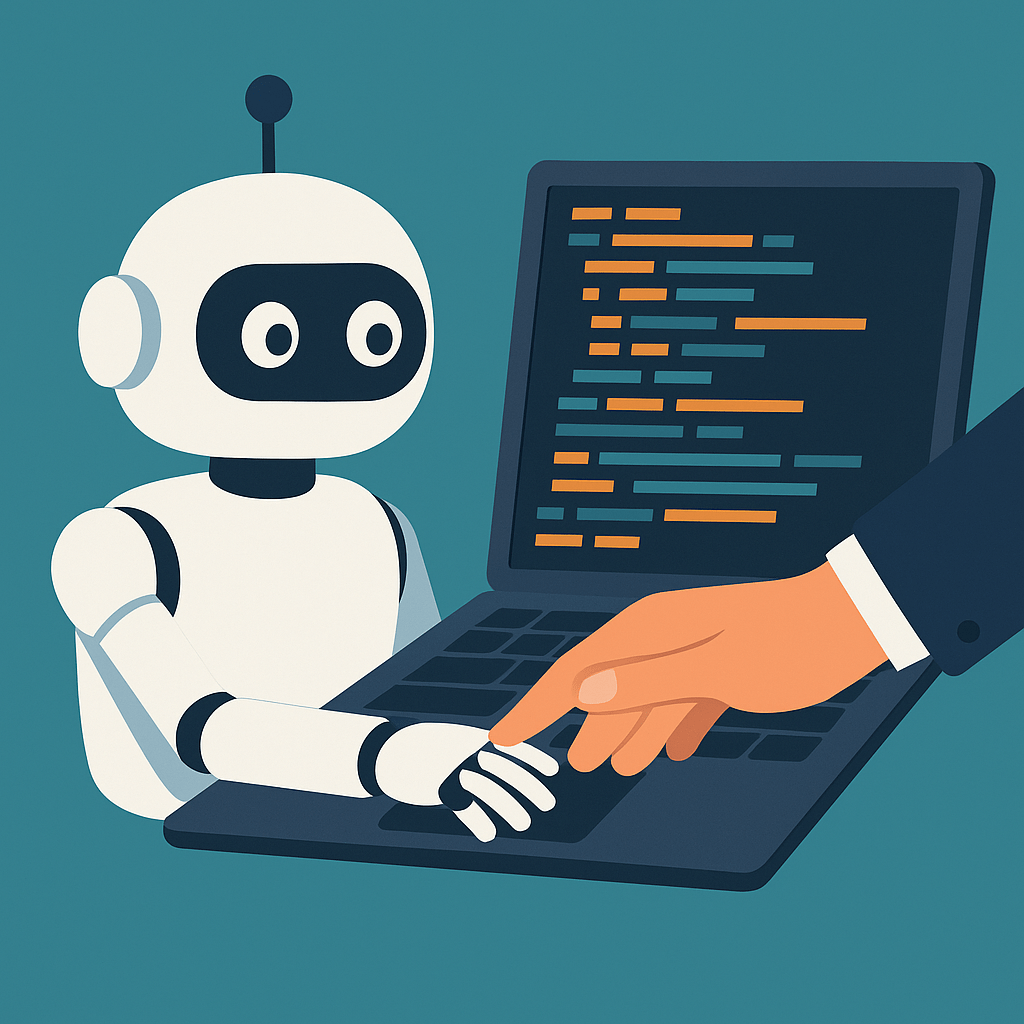
AI is an incredible tool. It’s fast, articulate, and tireless. It can write code, generate tests, and even plan releases. But like every powerful tool, it can also amplify the skill—or the lack of it—of the one using it.
I’ve started to notice a kind of crapification creeping into our industry. Not because AI is bad, but because we’re forgetting the fundamentals of what makes software valuable.
Software that knows how to work—but not why
AI can now spin up an app that works. It can create a CRUD interface, talk to an API, generate some tests, and even deploy. But AI doesn’t yet understand why the app exists, or what keeps a business sustainable.
That’s the part humans still have to bring:
The economic reasoning—what creates value, what drives cost. The empathy for users—what “done right” actually feels like. The discipline of systems thinking—how to build something that lasts.
Without those, AI becomes a very efficient generator of noise. It builds code that compiles, but doesn’t cohere. It designs features that look smart, but have no customer anchor.
The human disciplines that built our field
Long before AI, we had people like W. Edwards Deming, Peter Drucker, and Gerald Weinberg teaching us how to think about quality, systems, and people.
Deming reminded us that a bad system beats a good person every time.
Drucker taught that the purpose of business is to create and keep a customer.
Weinberg showed that quality is value to some person.
These aren’t old management clichés. They’re survival skills for the AI age. Because the temptation now is to let the tool lead, to assume speed equals value. But speed without understanding just gets you to the wrong place faster.
AI needs adults in the room
AI doesn’t know how to run a business. It doesn’t know your market, your constraints, your customers’ quirks, or your reputation.
It’s not a CEO, or a product manager, or even a quality engineer. It’s a very competent intern—eager, literal, and unaware of consequences.
That means organizations still need people who:
Know what not to build. Understand what good feels like to a customer. Recognize that profit comes from value, not just velocity.
Without those voices, software devolves into something that merely exists—shiny, but hollow.
Customers, beware of snake oil
There’s also a warning here for customers. The allure of “build your own AI-powered management system” is strong. But it’s a dangerous illusion.
The best organizations still depend on human intelligence—the kind shaped by experience, ethics, and pattern recognition that no model has fully captured.
Trust those who’ve built, scaled, and sustained real systems. The ones who understand that architecture, governance, and economics are intertwined. They may move slower, but their work endures.
Building with wisdom, not just power
AI is here to stay, and thank God for that. It’s helping us automate, explore, and imagine. But wisdom is still a human job.
If we want to avoid crapifying the future, we have to bring the same care that Deming brought to factories, Drucker brought to management, and Weinberg brought to testing—to this new generation of tools.
The future of software quality won’t just be measured in code coverage or velocity, but in whether we still remember why we build anything at all.
 Testing Tester
Leave a comment