Month: September 2025

  • Testing When You’re Tired

    Testing When You’re Tired

    Some days you have all the margin in the world.

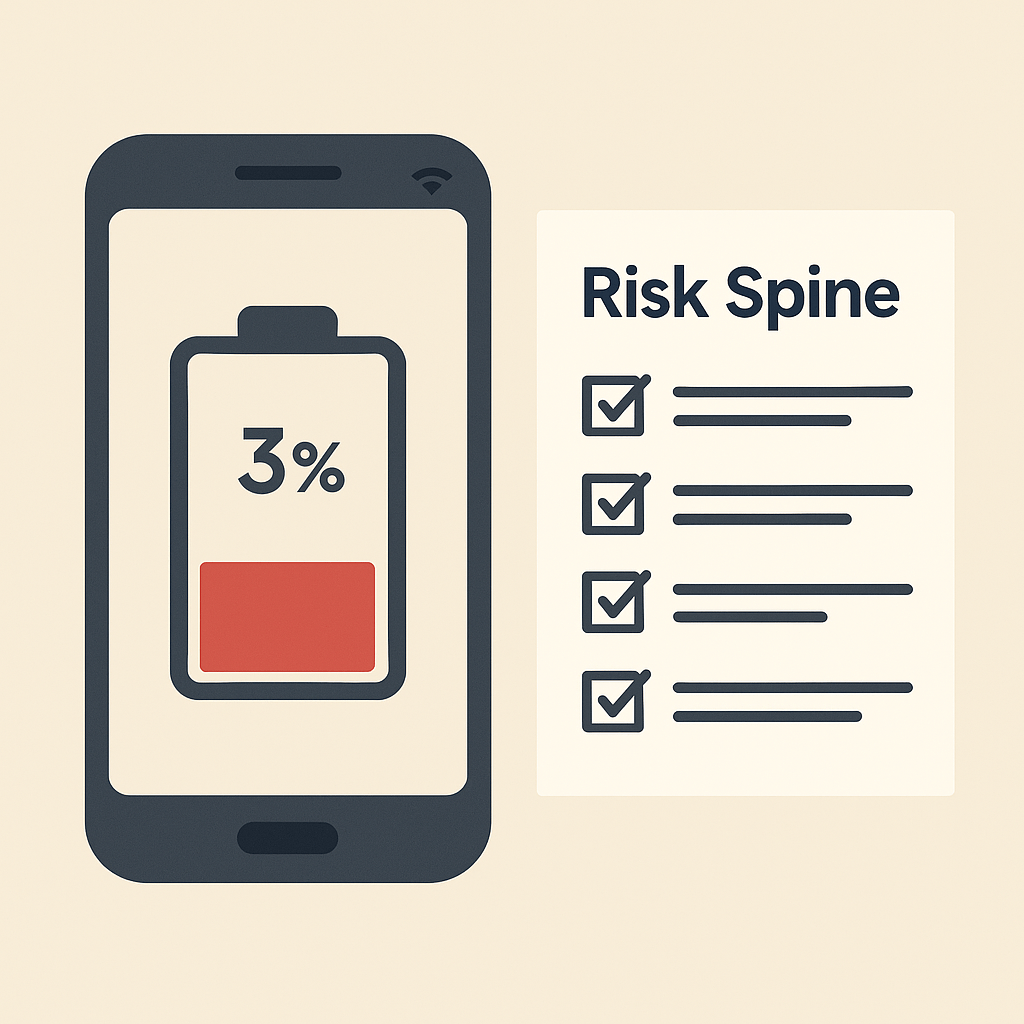
    Other days, your brain feels like a phone at 3%—dimmed, conserving, warning you not to open one more app.

    You still have to test.

    Ministry taught me something about this. You cannot live at full output forever, and you shouldn’t pretend you can. The work is real, the stakes are real, and so is the body that has to carry you through it. Here’s how I try to test faithfully when I’m tired—without making things worse for future me or for my team.

    1) Shrink the surface area, keep the signal

    When energy is low, I narrow the scope on purpose.

    Run the “risk spine.” Touch the core login, money, data-loss, and notification paths first. Favor high-yield charters. One flow, one persona, one failure mode. Capture just enough evidence. Two screenshots, steps, and an observed/expected pair. Stop there.

    Goal: preserve signal without chasing every shiny edge.

    2) Trade clever for clear

    Tired brains love rabbit holes. I choose clarity instead.

    Write plain-language observations instead of clever theories. Use templates: “Steps → Expected → Actual → Notes.” Log before you fix. Even if the fix seems obvious, leave a breadcrumb a teammate can trust.

    Goal: today’s clarity becomes tomorrow’s velocity.

    3) Instrument the moments you’ll forget

    Fatigue erases context. Save Future You.

    Tag runs with a build hash and test data seed. Paste the exact query, cURL, or environment toggle you used. When you guess, label it a guess: “Hypothesis: cache key collision.”

    Goal: make partial work reproducible and safe to hand off.

    4) Lean on tools without outsourcing judgment

    AI helps a lot when I’m running low, but I use it like cruise control, not a chauffeur.

    Generate test ideas or edge-case lists for a single flow. Ask for selector strategies or fixtures when my brain stalls. Let AI summarize logs or diffs I don’t have the attention to parse.

    Then I decide what matters. Tools can widen my view; they cannot choose my priorities.

    5) Choose checks over hunts

    Bug-hunting is expensive when you’re tired. Guards are cheaper.

    Add or tune alerts on error rate, latency, and key business events. Drop a smoke test or synthetic on the riskiest endpoint. Turn on feature flags and define a rollback. Write the rollback first.

    Goal: create tripwires so the system helps carry the load.

    6) Use the “10-minute closeout”

    Before you stop for the day, spend ten minutes to protect tomorrow.

    Title one issue per discovered risk, even if it’s thin. List next three tests you would run with fresh energy. State risk posture in a sentence: “Safe to ship behind flag. Watch sign-ups and webhook failures.”

    Goal: you end tired, not tangled.

    7) Hold humane boundaries

    Unless it’s life- or business-critical, it can wait until morning.

    Write it. Prioritize it. Rest.

    Goal: protect the human so the human can protect the system.

    A word to teams and leaders

    Tired testers don’t need pep talks. They need guardrails and focus.

    Agree on a risk spine everyone knows by heart. Keep a shared “when tired” playbook that swaps breadth for depth. Normalize short, clear notes over perfect reports.

    Quality is not heroics. It is repeatable care.

    There will always be days when the battery blinks red. On those days, fidelity beats speed. Narrow the scope. Preserve the signal. Leave a trail.

    It is enough to be faithful with the energy you have.

    Beau Brown

    Testing in the real world: messy, human, worth it.

  • Living in the Tension

    Living in the Tension

    AI makes me better at my job every day. It also makes me wonder what my job will look like tomorrow.

    Remote work allows me to be present at home in ways that once felt impossible. Yet it also keeps me tethered to a chair, watching the glow of my screen, responding to the latest “fire” while real life unfolds around me.

    Homeschooling has been a gift for my family. I get to see my kids learn and grow every day. And still, there are moments when I feel like an inattentive father, missing the chance to join them in the discoveries happening just down the hall.

    And like many people, I sometimes wonder about sustainability. Will this work provide a future strong enough to carry my family forward?

    Gratitude and Worry

    I find myself living in the tension between gratitude and worry. Grateful for meaningful work, for technology that amplifies what I can do, for the closeness of family life. Wary of what gets lost in the process, of what is slipping past while I am busy answering another message, of what tomorrow’s economy might hold.

    I don’t think I am alone in this. Many of us are trying to make sense of lives that are both more connected and more isolated than ever before, more productive and more precarious, more efficient and more exhausting.

    What I’m Learning

    I don’t have this all figured out. But here are a few things I’m learning to hold onto:

    Presence matters more than productivity. My kids may not remember every fire I put out, but they will remember whether I looked up when they came into the room. Faith is not an add-on. Trusting God with my future is not something I do after work; it’s the only way I can sustain work at all. Community has to be chosen. It doesn’t just happen when you’re remote. It requires intention—whether that’s a walk with a friend, a call to a colleague, or a small group that prays together.

    A Closing Thought

    The tension isn’t going away. AI will keep advancing. Work will keep demanding. Family will keep needing.

    But perhaps the goal isn’t to escape the tension. Perhaps the goal is to live faithfully within it—to keep showing up, to keep naming what is real, and to trust that the One who holds all things can hold even this.

    Beau Brown

    Testing in the real world: messy, human, worth it.

  • Testing in a New Environment: Learning to Walk Before You Run

    Testing in a New Environment: Learning to Walk Before You Run

    Starting to test in a new environment is like stepping into a house where every door opens to a room you’ve never seen before. The floorplan is unfamiliar. The furniture doesn’t match what you’re used to. Some doors lead to wide, bright spaces. Others open into cluttered closets where things have been stashed for years.

    That’s how it feels when you inherit a new data model, user flows, and all the little idiosyncrasies of an unfamiliar system.

    I felt this when I began at my current company. The product worked differently than anything I had tested before. The way data moved through the system, the permissions and flows users relied on, even the vocabulary teams used—all of it required patience to understand. It’s tempting in those early weeks to feel like you should already be contributing at full speed. But I’ve learned that testing is not about rushing; it’s about orienting yourself so your contributions actually add clarity and trust.

    What Makes This Hard

    Different Data Model You can’t assume fields, relationships, or hierarchies will line up with what you’ve seen elsewhere. Even basic entities like “client,” “task,” or “invoice” can mean something very specific to the business. Unique User Flows The same outcome (say, creating a billing record) may involve different steps, dependencies, or permissions than you’ve seen in other systems. Organizational Idiosyncrasies Every company has its quirks—naming conventions, old feature flags that never got retired, or workflows that exist only because of one big client. These things don’t show up in the onboarding docs but they matter a lot in day-to-day testing.

    Practical Advice for Getting Up to Speed

    Here’s what has helped me move at a reasonable pace while still beginning to contribute:

    Start With the Core Workflows Find the 3–5 most critical flows for the business. At my current company, this meant things like creating proposals, invoicing, and document signing. Learn those first. If you know what the lifeblood of the system is, you can already add value by spotting risks there. Use the Product Like a User Don’t just test features in isolation. Walk through them as if you are the customer. What do you notice? Where does it feel clunky or surprising? These observations become test charters in themselves. Pair With Someone Who Knows the System Early on, shadowing a developer or a customer success teammate can reveal hidden flows that no doc will tell you. At my current company, these conversations helped me discover what really scared people about production bugs. Write Down What You Learn Even if your notes feel messy, they’re gold. They give you something to return to when you forget, and they can become the foundation for onboarding the next person. Let AI Help I’ve found AI surprisingly effective for parsing database schemas, generating starter tests, or drafting docs from exploratory sessions. It doesn’t replace learning, but it speeds up the climb.

    Encouragement for the Long View

    In pastoral ministry, I learned that walking into a new congregation is not about proving yourself in the first week. It’s about listening, learning the story, and gradually earning trust. Testing in a new environment is the same. The story is in the data model, the user flows, and the quirks of the product.

    Give yourself time. Learn to walk before you run. And remember: the goal is not just to find bugs—it is to build confidence in the system, for yourself and for your team.

    Beau Brown

    Testing in the real world: messy, human, worth it.
  • Success, Happiness, and Testing

    Success, Happiness, and Testing

    When I started my career in software testing, I thought success was measured in bug counts, automation coverage, or how quickly I could write a regression suite. And sure, those things matter. But over time, I’ve realized that real success runs deeper.

    In his book The Personal MBA, Josh Kaufman puts it this way:

    “Success is working on things you enjoy with people you like, feeling free to choose what you work on, and having enough money to live without financial stress.”

    That definition resonated with me. It named what I’ve been reaching for all along in my work. But Kaufman doesn’t stop there. He also points out that what we often call “happiness” isn’t a single state you arrive at and hold forever. It’s more like a recipe, a combination of having fun, spending time with people you enjoy, feeling calm, and feeling free.

    Together, those two definitions helped me see that success and happiness aren’t separate pursuits. They overlap. They shape and support each other. Work that feels successful also creates conditions where happiness can take root. And happiness, in turn, deepens the meaning of success.

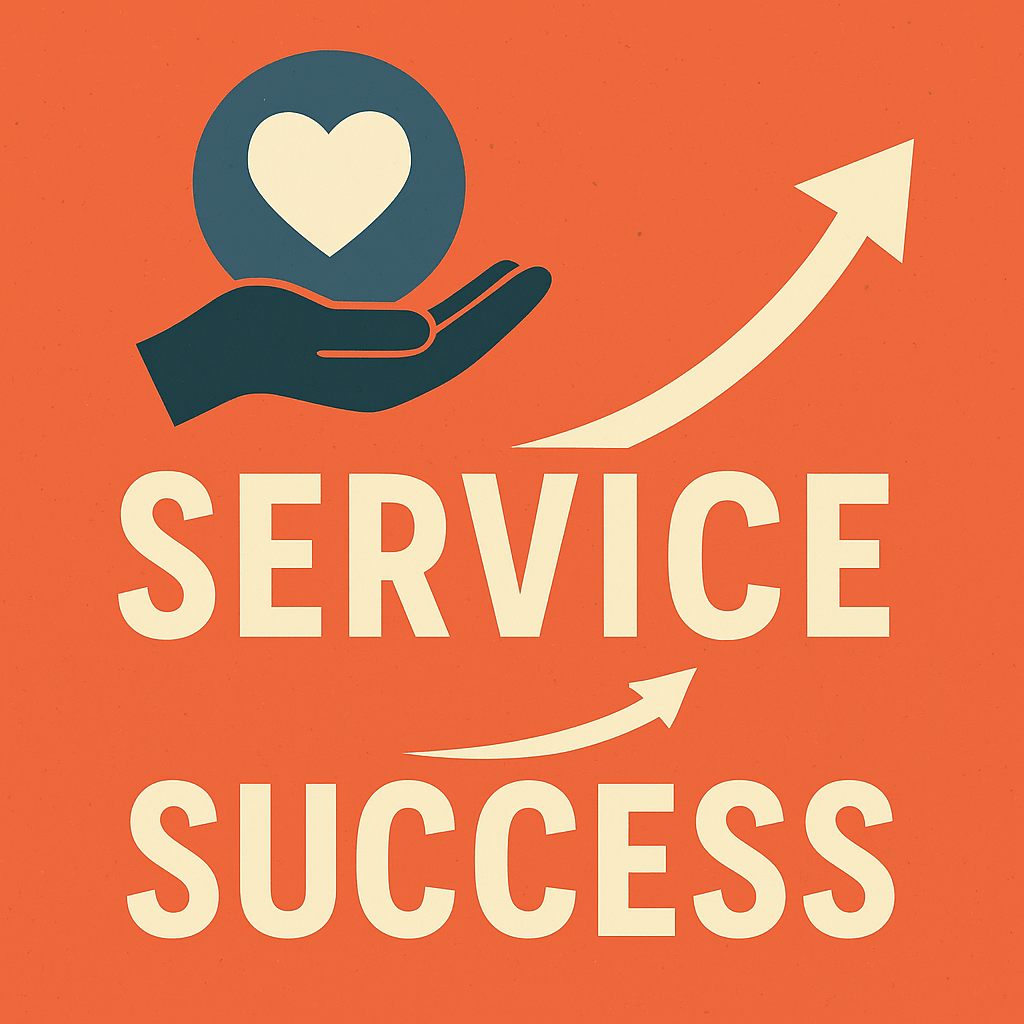
    If I could add one piece, it would be this: being of genuine service to others. I don’t think Kaufman’s definitions exclude this. In fact, I believe they imply it. Because the deepest joy in both success and happiness, for me, has come in those moments of helping others: a teammate finding clarity, a user getting what they need, a colleague discovering new energy because I made space for their contribution.

    Testing, at its best, offers opportunities for all of this. There’s joy in discovery, in collaborating with people you respect, in finding freedom through good systems and practices, and in serving others—whether that’s your team, your users, or the customers who trust your product.

    So when I communicate priorities, design processes, or mentor a teammate, my goal and aspiration is to ask: Does this help me serve others? Does it make space for freedom, calm, or connection? Does it move me toward the kind of success and happiness that really matter?

    Because in the end, the work of testing is not just about code or coverage. It is about building a life and a community worth being part of.